





A city has many layers, intertwined systems, and diverse functions. Ideally, these should be synchronized and connected so that they form a cohesive network—a healthy, urban organism. Lublin is taking a step in this direction today by shaping the Lublin Green Network.
Every bit of green space matters
One could talk and write endlesslyabout the benefits of green spaces in the city —from oxygen production and carbon dioxide absorption, through air purification and temperature reduction, to health, recreational, and aesthetic benefits—we owe a great deal to them. Its presence in Polish cities is also becoming increasingly noticeable, though we still have a long way to go; there are already signs of change—such as breaking up the concrete surfaces of city squares and introducing vegetation into them, as exemplified by the award-winning transformation of Nowy Targ Square in Wrocław—as well as decisions that raise concerns, such as the plan to mass-cut roadside trees in Warmia.
Read more: Massive tree cutting in Warmia. Who is to blame for the accident—the driver or the tree?
Every patch of greenery matters—from small squares and pocket parks to larger parks and areas considered wasteland. The key, however, is to connect all these elements, even the smallest ones, into a single system. Why is this so important?
When planning green spaces and the layout of urban nature, two approaches can be distinguished: a network of small elements—pocket parks, courtyards, squares, green roofs, and spaces scattered throughout the city like nodes in a network; extensive natural structures—large parks, forest belts, river valleys, wastelands, and community gardens. Smart planning isn’t about choosing one of these solutions. The point is for these elements to form a coherent system— a continuity that allows people, animals, water, and air to move, breathe, and wander through the city
— writes Magdalena Milert.
In her article “The City: A Story of Relationships,” Magdalena Milert recalls Anna Ptaszycka’s vision of green spaces, which the architect outlined in her 1950 book *Green Spaces in Cities*:
Ptaszycka wrote about the need to create a system of green corridors that would enable residents to “wander out of the city.” In her work, she proposed a concrete vision that today—in the era of the climate crisis and rapid change—seems more relevant than ever. She envisioned a layout in which one could step out of one’s backyard and, without interrupting a walk through parks, squares, river valleys, wastelands, and community gardens, reach the city’s outskirts and beyond, toward the forest or open spaces.
Lublin, as mentioned earlier, is following this path. The city—more specifically, a team from the Department of Landscape Architecture and Design at the John Paul II Catholic University of Lublin, in collaboration with the City of Lublin (the main partner), the Ministry of Climate and Environment, the Institute for Urban and Regional Development, the Institute of Soil Science and Plant Cultivation—National Research Institute, the Brama Grodzka Center—Teatr NN, the Society for Nature and Man, the “tu obok” Foundation, and the Cycling Alliance—has been implementing the project “Green Systems for Cities Tailored to the Challenges of the 21st Century” since March 2024 .
Work on the project will continue until September 2026 and will culminate in the “Green Networks — Green Systems for Cities” conference, scheduled for September 23 and 24 .
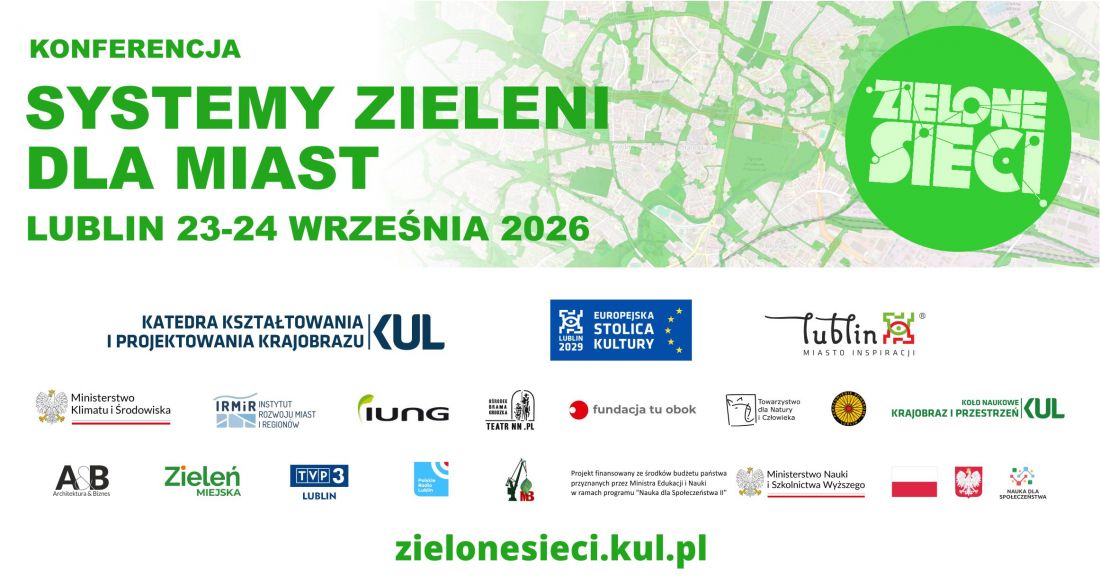
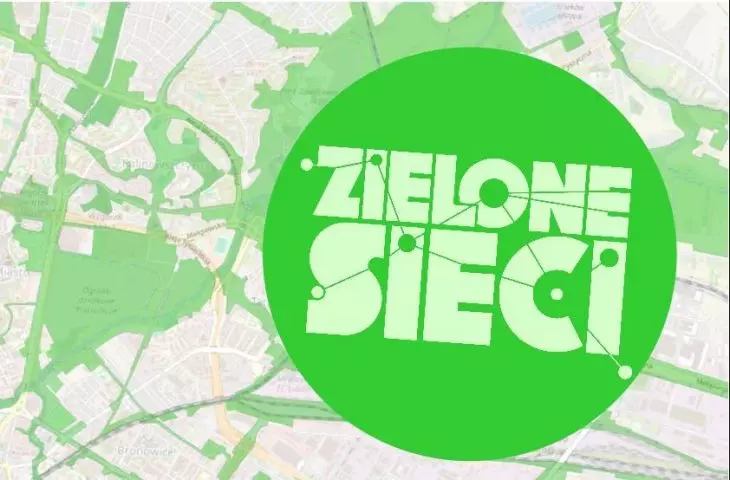
“Green Networks—Green Systems for Cities” conference
© organizers’ archive
Its goal is to define what green systems Polish cities (led by Lublin) need today, and the result will be the development of a Green System Concept for Lublin and a generalized Model for cities. Thus, all Polish cities will be able to benefit from it.
Entangled in a Green Network
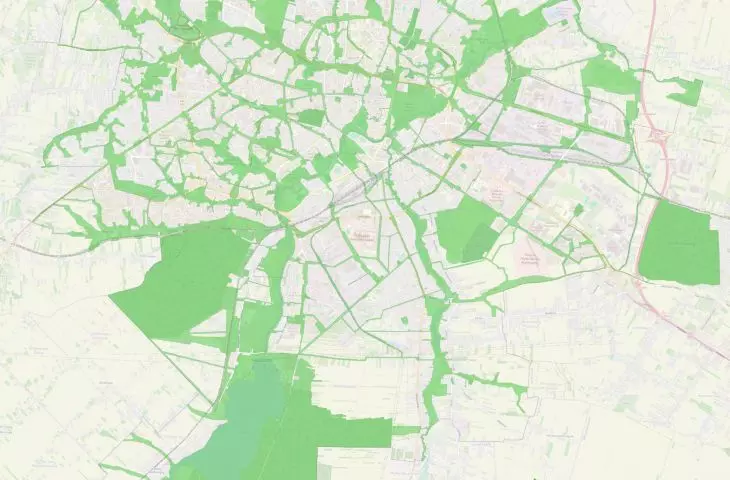
The Lublin network is expected to comprise nearly two hundred elements, including both existing green spaces and planned connectors, routes along railroad lines, and green streets. All these points have been marked on the green network map.
All green spaces in Lublin can be connected by a network of green links. By entering a single park or square, we can gain access to all the others throughout the city. River valleys and ravines, tree-lined avenues, vegetation corridors, and walking and biking trails form a “green internet” that can serve residents while also providing ecological and climatic connections. The green network is a vision for the future of a green Lublin, friendly to both residents and the environment. It is also a model solution that we are eager to share with other cities
— write the initiative’s creators.
The team working on the project analyzed not only the history of changing approaches to urban greenery and the legal framework for nature conservation in Poland, but also current trends in the design of green systems, including blue-green infrastructure, sponge cities, and nature-based solutions. The researchers also drew on proven global examples of urban green space systems—in Hamburg, Singapore, Helsinki, Memphis, and Stockholm. The findings of the study by Jan Kamiński, Ewa Trzaskowska, and Joanna Renda were published in the first monograph of the series “Green Networks—Green Systems for Cities Tailored to the Challenges of the 21st Century ”: “State of Research and Current Trends.” As part of the project, public consultations were also held, and landscape architecture students at KUL prepared development plans for specific green areas of the city. The results of this two-year project will be revealed in September!